

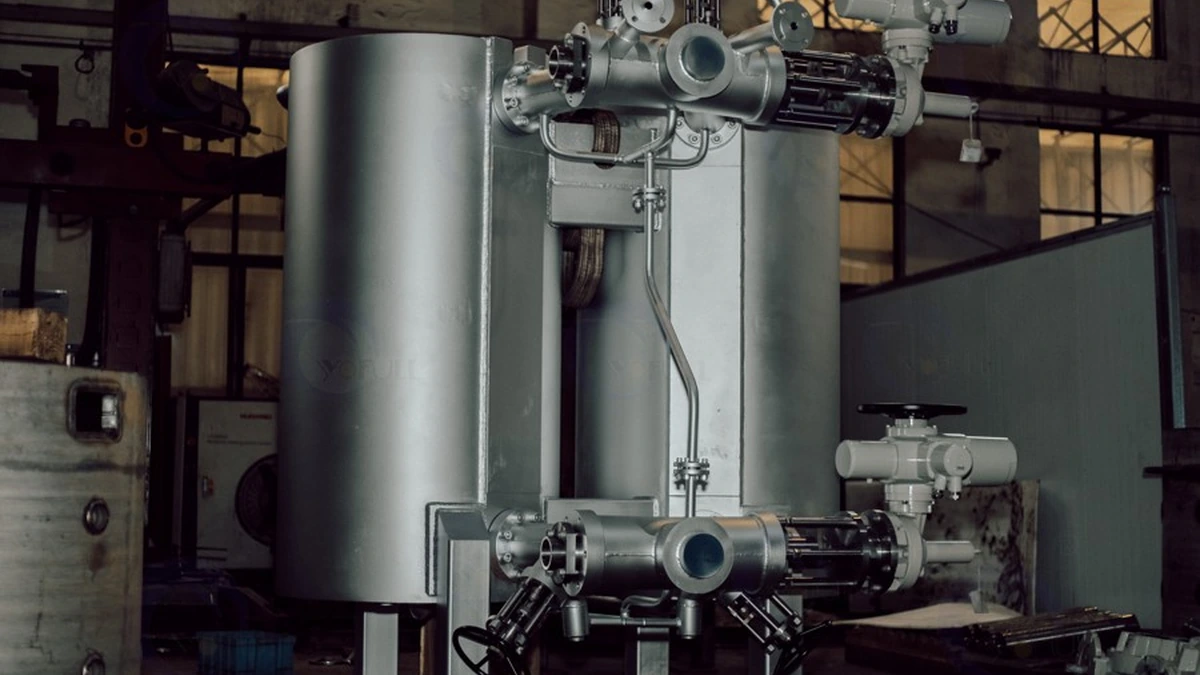
A PET line does not replace a “felt” or a “mesh” in isolation. It replaces an element that sits in a housing, sees a particular melt and has a service history. That is why a supplier’s alternative needs a little more checking than a micron number. Note the installed element, its filtration position and the reason for the change. The same details help frame a discussion about upstream melt-filtration equipment.
The useful question is practical: will the proposed element handle this melt, fit this assembly and give a result that can be compared fairly?
What changes when the filter medium changes?
“Felt” and “mesh” name the medium. They do not describe the whole candle. The finished element may combine a working layer with protection and support. Changing that arrangement can alter the flow path and the way pressure is carried.
A short quotation can hide that difference. Equal length, diameter or micron value still leaves effective area, support, end connection and sealing surface to check. Ask for a layer description or section drawing before calling them alternatives.
The rating needs the same check. Nominal and absolute ratings are different terms. Results from different test methods do not prove equal retention in a polymer melt. For a mesh option, ask how the layers are joined and supported. For a felt option, ask which layer does the retention work and how it is protected during handling. The answers do not select the element, but they show where a bypass path, pressure loss or fit issue might begin.
The customer reference treats sintered felt and stainless wire mesh as separate filter-media categories. That distinction is a useful starting point, but it does not establish equal ratings or performance in service. Confirm the actual media grade, layer arrangement, support and test basis for each proposed element.
Match the medium to the contamination load
The material in the line is the useful starting point: polymer grade, filtration point, reason for replacement and known contaminants belong on the record. Catalyst residue, degraded polymer, gels and metal particles may load the two media differently. Their amount and size can shift during the run. A particle on a removed candle is useful evidence. It still cannot stand in for a complete contamination report.
The first symptom usually decides which question comes next. A quality complaint points toward retention and a way to check it. A pressure rise or a shorter run points toward loading, pressure loss or dirt-holding capacity. The same media pair can therefore lead to different choices on different lines.
Deposit location can add a useful lead. A mostly clean outer surface with a fast pressure rise may justify checking deeper loading. A heavy deposit near the inlet may suggest another inspection route. Neither observation proves the cause. A sample or process record is still needed before assigning one.
Compare pressure drop under the same conditions
The figures are comparable only when the test details are close enough. Melt temperature, polymer grade or viscosity, throughput, effective area and pressure-tap locations can move a reading. Change one and the setup may explain the result instead of the medium.
Keep the clean-element baseline and production trend in separate fields. They describe different points in service. When a supplier sends a curve, note the flow rate, melt conditions, filter area, rating definition and test arrangement. Use the same fluid description and pressure-tap locations where possible. If viscosity or filter area differs, put that beside the result rather than forcing both values into one ranking column.
A laboratory figure can screen an option. It is not production evidence from another installation. The finished element and the line determine service life and operating pressure drop; the medium name cannot establish either one.
Check support, connections and cleaning compatibility
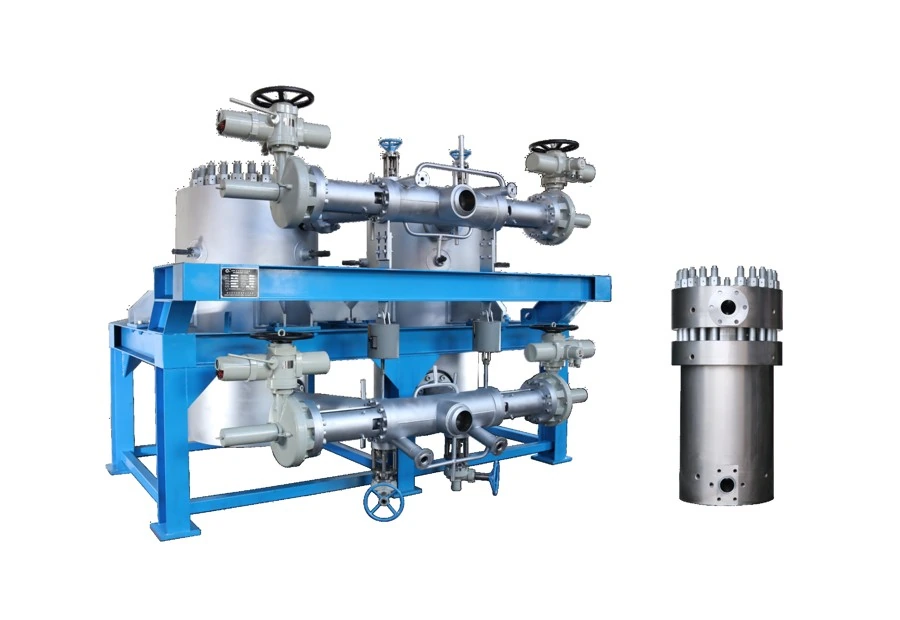
Put the installed and proposed elements side by side and check length, diameter, end connections, sealing surfaces, flow direction and support. A poor seating fit can change the intended flow path. For a later polymerization position, later-stage melt-filtration equipment gives process context. The actual match still needs model-specific confirmation.
Cleaning belongs in the same review. The treatment has to suit the medium, joining method and support structure, and the inspection afterward has to suit that construction. A method used on another element may offer background but does not prove compatibility here. Use approved model-specific instructions for temperatures, chemicals and exposure times.
The same reference lists TEG solvent cleaning with ultrasonic assistance for stainless sintered elements in chemical-fibre service. Treat this as a material-specific example. Verify the exact element construction and approved procedure before applying it to another element or line.
Record the action for a result outside the expected range. A visual check may find a distorted support or damaged joint that a pressure reading alone would miss. Any acceptance rule needs to belong to the construction and the customer’s approved procedure.
Put both options on one comparison sheet
A side-by-side comparison needs more than two micron ratings. Put the operating conditions and element details on the same sheet before comparing the figures.
| Check | What needs to match or be stated |
| Application | Polymer, filtration position and expected contaminants |
| Filtration rating | Rating definition and the test method behind it |
| Element construction | Filtration layer, support, joints and effective filtration area |
| Pressure-drop comparison | Flow, melt temperature, viscosity and whether the element is clean or loaded |
| Mechanical fit | Dimensions, connections and support arrangement |
| Cleaning and reuse | Permitted cleaning route and the checks required before return to service |
A missing test condition leaves the comparison open. Record it as a question for technical review rather than treating the two figures as equivalent.
Discuss the replacement element with Yufeng Filter
For a replacement enquiry, start with the element already in service. A drawing, material details and available operating history give the replacement-element discussion with Yufeng Filter a practical basis. Confirm the proposed medium and full construction for that application before treating it as interchangeable with the installed element.