

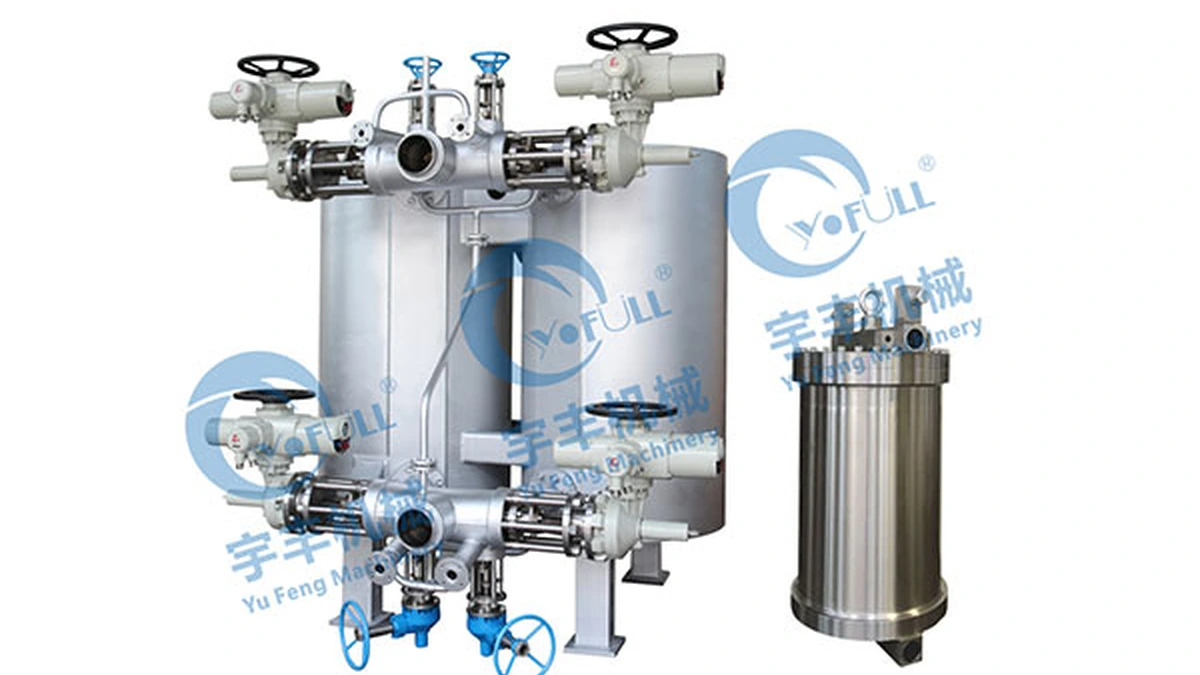
After polymer melt filter cleaning, can the candle go back into the housing? Removing the visible polymer answers only part of that question. Material may remain inside the media. Check for damage as well as residue: joints and supports have been through the cleaning treatment too.
Start with the removal record
An element removed during a planned changeout and one removed after a pressure rise do not have the same history. For final polymerization melt filtration, the record needs to identify the element, its position, the polymer grade and time in service. Note any process upset or product-quality concern that prompted removal. If differential pressure or throughput drove the change, record the trend and the conditions behind each reading. A pressure value by itself cannot show whether the cause was loading, a process change or a measurement difference.
A report marked only “cleaned” leaves the next reviewer with several questions. Which treatment was used, when, and by whom? What was checked afterward? Those details belong with the element ID. A before-cleaning photo can preserve the visible loading pattern, subject to site rules. The original clean-element test report is worth retaining, including the setup used to obtain its readings.
Choose a cleaning route for the residue and construction
Removing the outer layer of polymer exposes the filter surface. The open-looking surface says little about deposits lodged further in. There is also the condition of the residue to consider: material changed during processing may not respond to treatment like the original polymer. The cleaning provider needs that history before selecting a treatment.
The deposit may respond to heat, but that does not make every thermal cycle suitable. The assembled element has its own limits. Those limits cover the joints and supports as well as the media, and still apply when some residue proves difficult to remove. For a chemical treatment, the starting information is the identity of that residue. Then check the proposed chemistry against the exposed materials. That check includes any seals left in place; knowing the metal alone is not enough.
Ultrasonic or mechanical treatment may also have a place in the cleaning procedure. Access matters here. Brushing reaches the exposed deposit. It gives no check of what remains deeper in the media, and excessive force can deform the filtering surface. Washing has limits for the same reason. The cleaning procedure needs to account for the less accessible areas as well as the outside.
The customer reference lists TEG solvent cleaning with ultrasonic assistance for stainless sintered filter elements used in chemical-fibre service. This is a scoped example, not a universal instruction for every candle, mesh or felt construction. Confirm the element type and approved site procedure before use.
Inspect the parts that affect fit and filtration
A blocked patch and a cracked joint should not end up under the same description on the inspection sheet. The patch may call for more cleaning. A damaged joint may instead lead to a discussion of replacement filter elements. Cleaning will not mend the joint. Look along the body for distortion, loose layers or damaged welds. The end fittings deserve a separate check, particularly where the element seals into the housing. A leak at that connection can allow melt to miss the filtering medium altogether.
For a questionable dimension, the drawing or an approved reference gives the inspector something to compare against. An outside photograph provides no equivalent check of hidden layers or pore consistency. Record details against the element ID rather than writing only “clean.” Removal does not mean the equipment is cool or empty. Isolation, cooling and handling still follow the site procedure.
Compare results on the same test basis
A lower pressure drop after cleaning needs context. The first comparison is between test setups. Fluid and temperature go together on the report, along with flow rate, measurement points and element configuration. If any of these changed, a change in pressure is harder to attribute to cleaning. Missing details belong in the original test record; without them, the two readings should not be treated as a before-and-after result.
Flow resistance and structural integrity are separate checks. A pressure reading addresses the first. It cannot settle the second. Where an integrity test is required, its procedure and acceptance limit need to suit that construction. A release limit from another design cannot simply be copied onto this report. Its applicability needs technical review.
Without the baseline or test method, the reviewer still lacks a basis for accepting the result. The element stays on hold for technical review.
Make the reuse decision traceable
The outcome should follow the evidence and the plant’s criteria. A simple record can separate three decisions:
| Decision | Evidence to review | Record the next step |
| Reuse | Traceable service and cleaning history; inspection and required tests within approved limits | Why the element is cleared for return to service |
| Reclean | A specific residue remains and another approved cycle can address it without exceeding the element’s limits | Method used and checks repeated afterward |
| Replace or hold | Damage, unknown history, an unsuitable cleaning route, a failed check or no release basis | Reason for holding the element and who will review it |
A cycle count is useful maintenance history, but it should not become a release limit unless the customer has established one for the element.
If replacement becomes the practical option, include the element ID, filtration position and service history when discussing a replacement with Yufeng Filter.
Keep one record for the next maintenance cycle
| Record item | What to capture |
| Element ID and filtration position | Model or drawing reference where available |
| Service history | Polymer grade, dates in service and removal reason |
| Pre-cleaning condition | Pressure or flow trend, process conditions and photos if permitted |
| Cleaning | Date, approved method and provider if applicable |
| Inspection and test | Findings, method, conditions, result and applicable limit |
| Release decision | Reuse, reclean or hold/replace, with reviewer and date |