

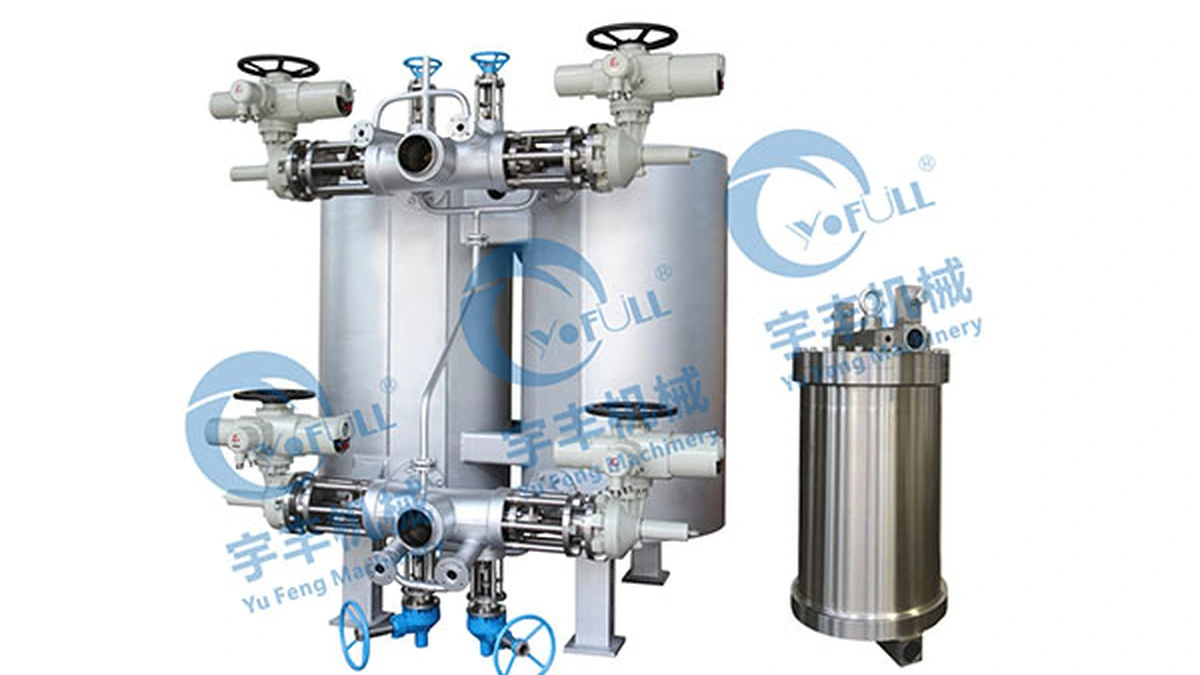
A polymer melt filter quotation starts with the process requirements, not a model number. For a procurement manager buying for a PET line, the useful starting information is the material, production rate, operating conditions and purpose of the purchase. These details give Yufeng Filter a basis for discussing a suitable configuration.
A micron rating and an output target alone leave questions open. Is the output today’s normal rate or a future expansion target? Does the request cover a complete assembly or replacement candles? The answers affect both equipment selection and what the price includes. Existing drawings and production records can supply much of the information; outstanding values can remain marked “to be confirmed.”
Identify the polymer and filtration point
The inquiry should name the PET grade, end product and position of the filter in the process. A continuous polymerization project and a chip-fed spinning line need different descriptions. For a replacement, the existing equipment tag and drawing help identify the installation.
A pre-polymerization melt filter serves an upstream stage, while a filtro de fusión de polimerización final serves a later filtration point before downstream processing. A marked process drawing makes that distinction clearer than an old equipment name alone.
Useful material details include intrinsic viscosity (IV), its test basis, additives, recycled content and grade changes. IV is a material property related to polymer chain size, not a direct measurement of melt viscosity at the filter. Keeping the original material data with the inquiry avoids losing that context.
Separate normal output from maximum throughput
Normal output and maximum continuous throughput should be listed separately, with units such as kg/h. A future expansion target or short production peak needs its own label. Minimum output is relevant where reduced-rate production is routine.
Each operating condition needs the corresponding grade and melt temperature. Combining the highest output from one run with a temperature from another may describe a condition the plant never uses.
Production continuity also affects the discussion. Can the line stop for an element change, or is switching between filter chambers required? Stating that requirement helps clarify the proposed arrangement without asking the buyer to choose its detailed configuration first.
Distinguish temperature and pressure values
Normal melt temperature, inlet pressure and outlet pressure describe the operating conditions. Equipment limits answer different questions and need separate labels:
- Operating pressure:pressure during the stated production condition.
- Design pressure:the documented design basis for the equipment.
- Differential pressure:the difference between filter inlet and outlet pressures.
The housing’s design pressure is not the allowable pressure difference across the filter. Measurement locations and units belong beside the values so that the technical review compares like with like.
For a replacement, clean-filter readings and the installation’s approved alarm or changeover settings provide useful references. Heating-medium conditions should remain separate from melt-side data; a jacket controller setpoint is not a measured melt temperature.
Describe the filtration requirement or current problem
An existing filtration specification should include the rating definition and available test information. Nominal, absolute and efficiency-based ratings need their stated basis before comparison. The same micron number does not necessarily mean the same retention performance.
If the rating is undecided, a description of the problem is still useful: black specks after restart, short operating cycles or excessive pressure drop. Timing, photographs and operating records give the discussion a clearer starting point than a request for “finer filtration.” A photograph documents appearance, not necessarily composition.
The proposed medium, effective filtration area and element quantity are selection details to review in the technical offer. They are not calculations the procurement manager must complete before contacting Yufeng Filter.
Define heating, installation and purchase scope
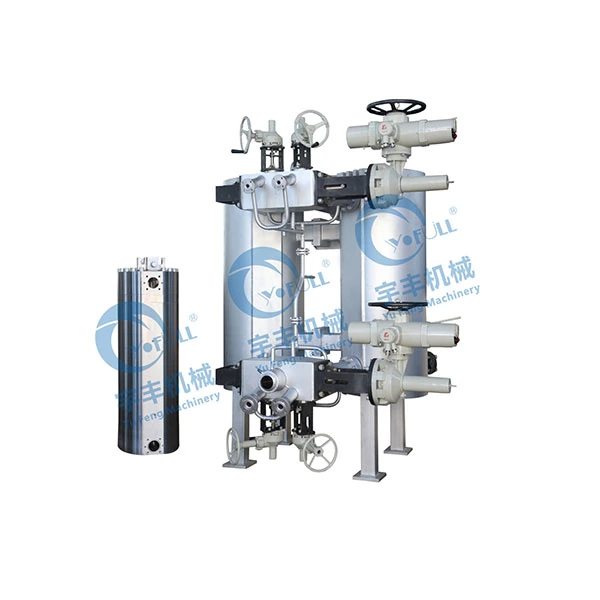
The inquiry needs the available heating medium, supply conditions and connections, together with the requested scope for filter and valve jackets, pipework and insulation.
For a retrofit, connection sizes, nozzle orientation and a layout or measured sketch help establish whether the assembly fits. Space for lifting and withdrawing elements matters alongside the pipe connections.
The purchase scope should distinguish the housing, candles, valves, instruments, controls and spares from items retained by the plant. Installation country and required inspection documents also belong here. Any product-quality acceptance target needs an agreed test method and limit during technical review.
Prepare a polymer melt filter quotation checklist
This checklist brings the request together. Each entry can contain a confirmed value, a document reference or an open point for discussion.
| Information group | Detalles a incluir |
| Material and application | PET grade; IV and test basis; additives or recycled content; filtration point |
| Output and continuity | Normal and maximum continuous throughput; future duty; stopping or switching requirement |
| Melt conditions | Temperature; inlet/outlet pressure; separately labelled design and differential-pressure limits |
| Filtration need | Rating and definition, or current problem; timing and available records |
| Heating and installation | Heating supply; connections; layout; maintenance clearance |
| Purchase scope | Assembly or elements; valves, controls and spares; inspection and acceptance requirements |
The known details can form the message in the Yufeng Filter inquiry form. Available drawings, photographs and records can be identified for follow-up. A clear request leaves room for technical questions without making a complete model selection a condition for starting the conversation.